
The shoe video that went all wrong: Six tips to avoid a poorly edited marketing video
Six ways to make sure your commercial message lands

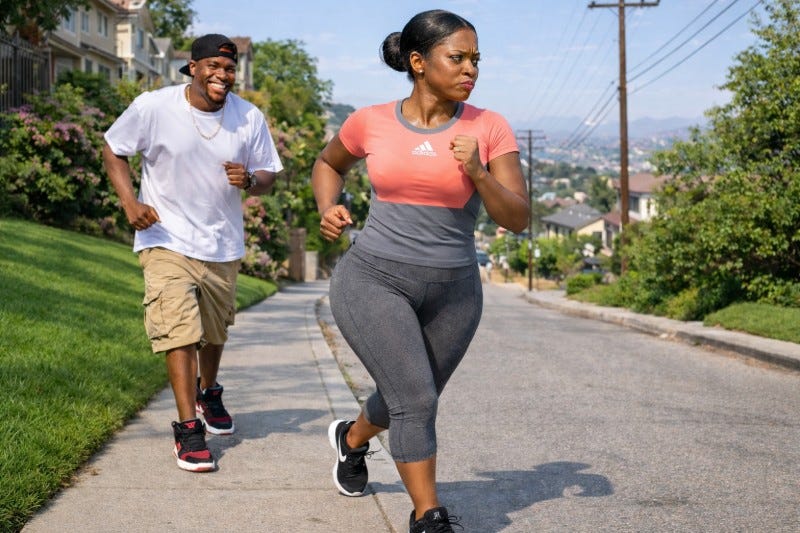
The young lady tied her shoes and started running uphill on a sidewalk. She heard footsteps behind her and turned to see a casually dressed man following her. She rolled her eyes, not wanting to be bothered or flirted with while she jogged. On the well-lit street, she jogged a little faster. Then, he jogged at that same speed to keep up. However, he was getting tired faster. She chuckled.
Only a quarter mile away, she slowed down to try to hide her laugh at this guy. He caught up, and she waited for him to ask for her number so she could continue her jog in peace. Instead, he pointed toward her feet and said, “I love your shoes. Where’d you get them? I want to buy them for my girlfriend.”
My group project was supposed to end with the whole communications class cracking up laughing at how much this exercise lady was feeling herself — and got a huge slice of humble pie. Instead, there were crickets and one college friend of mine shouting out, “Goooooone, Montie!”
I put my head in my hands. Although I’d played the role of the lady in this fake Nike commercial, I hadn’t seen the final cut of the video. Had the three guys who were in my group shown the video to me instead of telling me it was complete and turning it in without my thoughts, I could’ve pointed out all the flaws and asked for a re-edit.
ADVERTISEMENT ~ Amazon
As an Amazon affiliate, I earn a percentage from purchases with my referral links. I prioritize featuring intriguing products from small businesses, women-owned businesses and Black-owned businesses. All five of my Substack publications include a MINIMUM of one product sold by a VERIFIED Black-owned business.


Video Marketing Flaws
All three young men were friendly, and we had a good time filming. I even invited them to my off-campus apartment to get ready for the shoot. However, we made careless mistakes.
I hadn’t tried on this athletic outfit ahead of time and assumed my new outfit (still on the hangers) would fit correctly. Instead, and even at a size 6/8, I had “cottage cheese legs” and my butt was bouncing way too much while I was jogging. But I didn’t want to ruin our video shoot by asking to change into more flattering workout shorts, so I just shrugged and embraced being shapely.
I didn’t realize that my outfit was Adidas while the shoes were Nike, which would accidentally give Adidas free publicity in a mock Nike commercial.
The audio was too low for viewers to hear the guy chasing me say, “I love your shoes. Where’d you get them? I want to buy them for my girlfriend.” They just saw his mouth moving.
No one checked the weather while we were filming nor were we mic’d up. So his end of the conversation was muffled.
The end of the video showed me with a wide-toothed grin instead of a “shaaaaaade” face, baffled that he didn’t want my number. (In reality, I was grinning at the person filming, and I was getting ready to say, “We finished!”)
The camera never panned down to my shoes or had a logo on the screen for the shoes.
To a new viewer, it just looked like the equivalent of an Instagram Reel of me showing off a new outfit (and what I got from my mama). Every possible thing that could go wrong with this video did go wrong with this video. And while my communications instructor happily clapped and gave us an “A” for turning in the assignment earlier than the rest of our class, I was the least happy about it. I wanted a perfect score for a video we could be proud of, and I wasn’t.

That taught me a valuable lesson about marketing, branding and video editing. In all of the videos I’ve created since then, from volunteering at the Hyde Park Jazz Festival to random TikTok videos, I’ve always kept that college communications video in mind to answer one question: Even if the viewer doesn’t “get” the video, did you?
ADVERTISEMENT ~ Amazon
As an Amazon affiliate, I earn a percentage for every purchase with my referral link.


Six common errors that make videos look amateurish
1. If the viewer doesn’t know what you’re selling, you’ve lost out on buyers.
One of my favorite kind of surveys to do on TesterUp is to rate commercials. There’s a happy meter that I can press when something in the commercial makes me joyful. After the video is over, I’m asked quite a few questions. The last question is always requesting me to type in the brand that the commercial is about. On at least two occasions, I had no idea. I was so distracted by the bells and whistles, or a celebrity I wasn’t a fan of, and had zero idea what I was supposed to buy.
2. Make sure the tone of the commercial and the tone of the actor’s voice match.
There’s a YouTube commercial that comes on all the time with a 20-something, very pretty Black woman who grins a mile wide before saying, “If you’ve been injured in a car accident.” I grind my teeth and immediately press the “skip” option as soon as I see her.
As a prior car owner who has had my car rear-ended three times — one teenager was texting while driving; a couple of guys were drunk and headed home from a party; an impatient veteran wanted to get past me in the left-only lane — and side-swiped by a fourth driver who went to the police station and abruptly left (and was later charged with a hit-and-run for not returning), there’s nothing funny about car accidents. I was luckily never injured in any of the four, but paying for the deductible hurt my pocket with the hit-and-run driver. Meanwhile, that commercial sounds like the actor is about to break out her pom-poms.
3. Avoid noises that immediately irritate the viewers.
I hate the sound of most alarm clocks. I hate that noise so much that I haven’t had a traditional alarm clock in over a decade. I solely buy sunrise travel alarm clocks and white noise machines. And I will leap across the room for the remote control to mute any commercial with that “anh! anh! anh!” sound.
ADVERTISEMENT ~ Amazon
As an Amazon affiliate, I earn a percentage for each sale made with my referral links on this page.


If you’ve ever watched PLUTO or TUBI, you’ve seen a TikTok commercial with someone way too close to the camera or screaming a message at the top of their lungs. It doesn’t take long to understand why professional actors should always keep their jobs when it comes to marketing products, including mobile game apps and pay-to-play survey apps. It also further confirms why the Commercial Advertisement Loudness Mitigation (CALM) Act was created. With this act, the Federal Communications Commission requires commercials to have the same average volume as the programs they accompany.